
Recycling of Photovoltaic Modules
Photovoltaic modules are made of valuable materials that can be recovered and recycled at the end of their useful life. The standard recycling process consists of three steps:
1. Disassembly
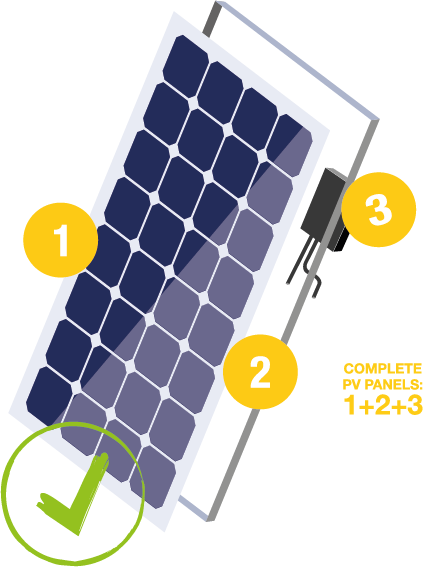
The first step involves breaking down the modules into their main components. A typical solar module consists of:
- an aluminum frame
- the connecting cables
- a junction box
- the actual module with solar cells
The junction boxes and cables are removed manually, while the aluminum frame is removed mechanically. The individual parts are then sent separately for recycling.
2. Shredding
Solar modules are mechanically shredded in specially designed recycling facilities. This process produces fine mixtures of materials that are easier to transport and more efficient to process further.
3. Separation & Cleaning
The shredded components are then sorted and cleaned according to material type:
- After cleaning, the aluminum is sorted by type and can be processed directly in industrial applications.
- Cables are separated into their constituent parts—copper and plastic—both of which can be reused without further processing.
- The composite materials used in the actual PV cells—consisting of glass, silicon, metals, and plastics—undergo multi-stage processing procedures.
Some plastics containing residual glass are used for energy recovery or, for example, in the cement industry and road construction —where they replace natural raw materials.
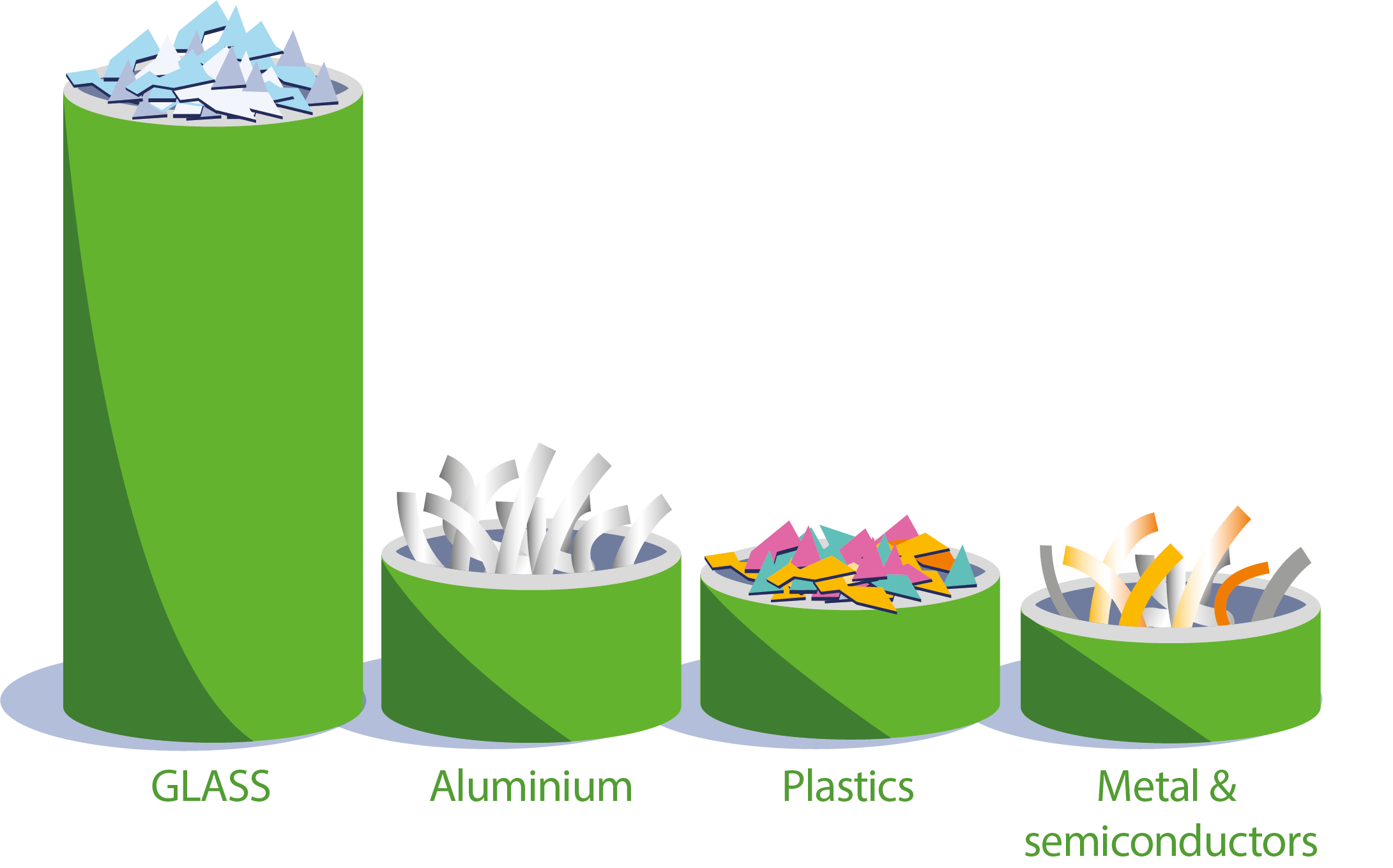
Recycled glass from PV modules has a wide range of applications:
Most of it is processed into glass wool or foam glass and used in the insulation industry —where it actively contributes to energy savings.
Thanks to ongoing research and development, PV glass can now also be used in glass processing —for example, in the production of bottles or float glass, which is high-quality flat glass used in windows and architecture.
Particularly valuable material fractions, such as glass-silicon mixtures containing precious metals (e.g., silver), are sent for further processing at specialized refining facilities.
Result: A high recycling rate
Thanks to modern technologies , the recycling process now achieves high recovery rates. In this way, PV CYCLE actively contributes to the conservation of resources and the development of a functioning circular economy for the solar industry.